← Back to Contract02 · PROPERTY

Property & current condition

What exactly are you buying?

Make sure documents and reality point to the same asset.

Overview graphic for Property & current condition
CONTRACT FLOW

Define the scope in one flow.

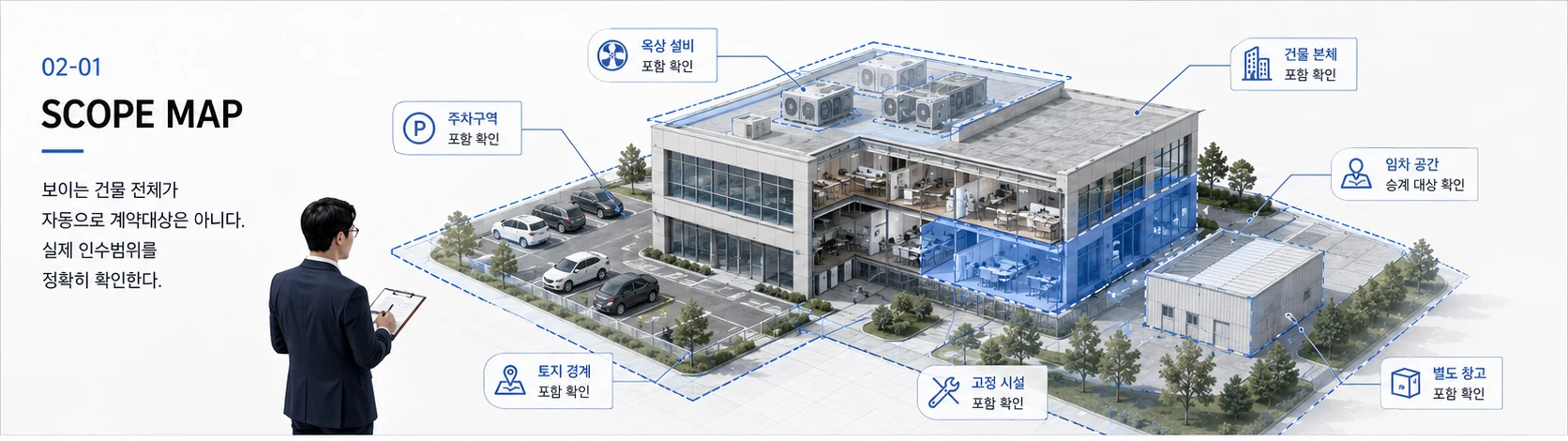
Defining the property means turning “this building” into a precise scope: land, building, ancillary areas, parking, fixtures, equipment and the tenancy position you will actually take over.

  1. 01LAND

    Defining the property means turning “this building” into a precise scope: land, building, ancillary areas, parking, fixtures, equipment and the tenancy position you will actually take over.

  2. 02BUILDING

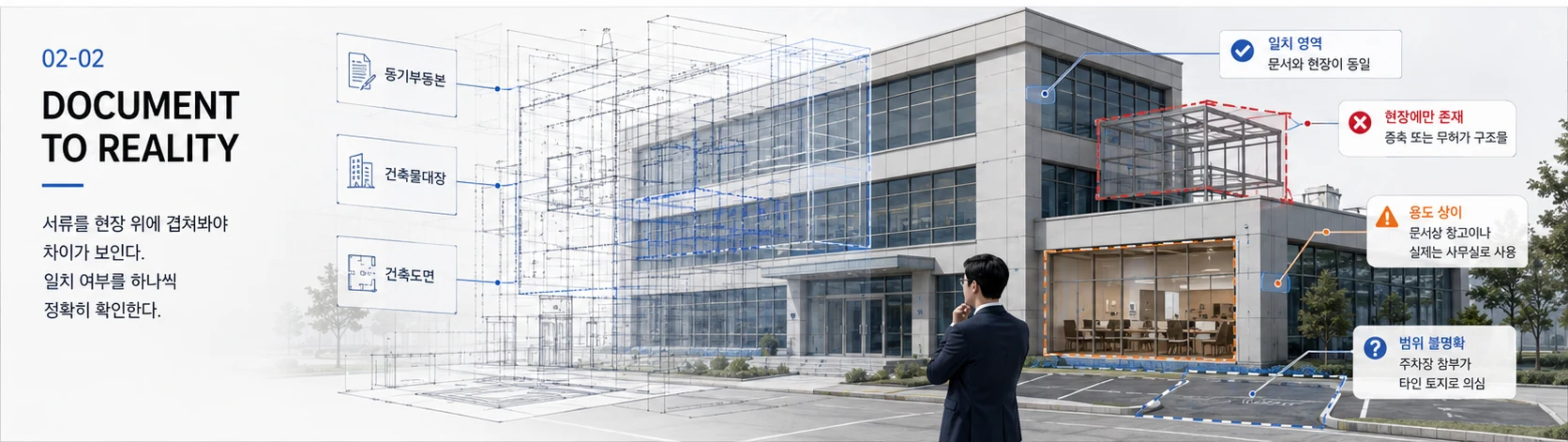
    Compare registration and public records, the actual site and the contract description. Focus on what is included and in what condition, rather than repeating the investment analysis.

  3. 03RECORDS

    A property may have passed your analysis but the asset you finally receive can differ from what you expected if boundaries, facilities or occupancy details are unclear.

  4. 04SITE

    Match the contract description against records and the site. Identify included fixtures and ancillary spaces, and refresh tenancy and deposit figures as of the contracting date.

  5. 05FACILITIES

    A rooftop storage area and parking equipment may have been treated as part of normal use, but that does not automatically mean they are included in the sale.

  6. 06TENANCY

    A property is more than an address. Make the documents, physical condition and included scope describe the same asset.

  7. 07CONTRACT

    Defining the property means turning “this building” into a precise scope: land, building, ancillary areas, parking, fixtures, equipment and the tenancy position you will actually take over.

NORMAL BASELINE

Start with the baseline scope.

Compare registration and public records, the actual site and the contract description. Focus on what is included and in what condition, rather than repeating the investment analysis.

01LAND→
02BUILDING→
03RECORDS→
04SITE→
05FACILITIES→
06TENANCY→
07CONTRACT
When the sequence connects without unexplained gaps, move to the next verification.
Practical comparison graphic for Property & current condition
VARIABLES

Check the variables that change scope.

Analysis focuses on income, location, and risk. At the contract stage, you must lock down exactly what will be acquired and in what condition. Match the land and building descriptions, actual use, tenancy, facilities, and fixtures with the contract and the handover scope.

01

Match the property description in ownership records and the contract.

Confirm that parcel identifiers, building descriptions, and other basic identifiers match.

WHAT TO CHECK
  • Land parcel identifiers
  • Building description
  • Ownership scope
  • Related land or accessory structures
WHY IT MATTERS

Compare the contract description with land records, building records, and the actual property rather than relying on one document.

PREVENT

Land parcel identifiers

IF DISCOVERED

Does the contract description of the land and building match current official records?

Resolve the difference before moving to payment or closing.
02

Compare land/building records with actual use.

If recorded area, use, structure, or floor count differs from the physical property, determine whether it is merely descriptive or whether it affects administration, rights, or value.

WHAT TO CHECK
  • Area
  • Use
  • Structure/floor count
  • Notations of violations or irregular status where applicable
WHY IT MATTERS

Parking equipment, rooftop facilities, signage, HVAC equipment, fixtures, or other items used with the property are not automatically part of the sale.

PREVENT

Area

IF DISCOVERED

Is anything at the site inconsistent with the records?

Resolve the difference before moving to payment or closing.
03

Check land and building ownership separately.

Do not assume the land and building have the same owner. Confirm each and identify any shared interests or related parcels.

WHAT TO CHECK
  • Land owner
  • Building owner
  • Shared interests
  • Related parcels
WHY IT MATTERS

Existing tenants, deposits, rent, and service charges affect what the buyer assumes.

PREVENT

Land owner

IF DISCOVERED

Have ownership interests in the land, building, and important facilities been confirmed?

Resolve the difference before moving to payment or closing.
04

Fix the list of facilities, fixtures, and accessory areas.

Do not assume that parking systems, HVAC units, signs, rooftop structures, storage, machinery, or furniture are included just because they are visible.

WHAT TO CHECK
  • Included facilities
  • Excluded facilities
  • Items to be removed
  • Handover condition
WHY IT MATTERS

Compare the contract description with land records, building records, and the actual property rather than relying on one document.

PREVENT

Included facilities

IF DISCOVERED

Have included and excluded facilities been separated?

Resolve the difference before moving to payment or closing.
MISSED POINT

Easy-to-miss scope checks.

The goal of checking the contract scope is not to analyze whether the building is attractive again. It is to make the asset described in the contract match the asset you will actually take over.

01

Does the contract description of the land and building match current official records?

Confirm that parcel identifiers, building descriptions, and other basic identifiers match.

02

Is anything at the site inconsistent with the records?

If recorded area, use, structure, or floor count differs from the physical property, determine whether it is merely descriptive or whether it affects administration, rights, or value.

03

Have ownership interests in the land, building, and important facilities been confirmed?

Do not assume the land and building have the same owner. Confirm each and identify any shared interests or related parcels.

04

Have included and excluded facilities been separated?

Do not assume that parking systems, HVAC units, signs, rooftop structures, storage, machinery, or furniture are included just because they are visible.

05

Is the tenancy and deposit information current as of the contract date?

Confirm tenants, deposits, rent, arrears, adjustments, scheduled move-outs, and new leases using the latest information. There is no guarantee that an earlier rent roll remains accurate.

HOW TO CHECK

Verify the scope in order.

The goal of checking the contract scope is not to analyze whether the building is attractive again. It is to make the asset described in the contract match the asset you will actually take over.

  1. 01

    Match the property description in ownership records and the contract.

    LOOK HERE

    Confirm that parcel identifiers, building descriptions, and other basic identifiers match.

    COMPARE

    Land parcel identifiers

    NORMALThe current evidence matches the expected condition.
    IF DIFFERENTIdentify the cause and impact of the difference.
    ACTION
    • Land parcel identifiers
    • Building description
    • Ownership scope
    • Related land or accessory structures
    Does the contract description of the land and building match current official records?
  2. 02

    Compare land/building records with actual use.

    LOOK HERE

    If recorded area, use, structure, or floor count differs from the physical property, determine whether it is merely descriptive or whether it affects administration, rights, or value.

    COMPARE

    Area

    NORMALThe current evidence matches the expected condition.
    IF DIFFERENTIdentify the cause and impact of the difference.
    ACTION
    • Area
    • Use
    • Structure/floor count
    • Notations of violations or irregular status where applicable
    Is anything at the site inconsistent with the records?
  3. 03

    Check land and building ownership separately.

    LOOK HERE

    Do not assume the land and building have the same owner. Confirm each and identify any shared interests or related parcels.

    COMPARE

    Land owner

    NORMALThe current evidence matches the expected condition.
    IF DIFFERENTIdentify the cause and impact of the difference.
    ACTION
    • Land owner
    • Building owner
    • Shared interests
    • Related parcels
    Have ownership interests in the land, building, and important facilities been confirmed?
  4. 04

    Fix the list of facilities, fixtures, and accessory areas.

    LOOK HERE

    Do not assume that parking systems, HVAC units, signs, rooftop structures, storage, machinery, or furniture are included just because they are visible.

    COMPARE

    Included facilities

    NORMALThe current evidence matches the expected condition.
    IF DIFFERENTIdentify the cause and impact of the difference.
    ACTION
    • Included facilities
    • Excluded facilities
    • Items to be removed
    • Handover condition
    Have included and excluded facilities been separated?
  5. 05

    Refresh tenancy as of the current contract date.

    LOOK HERE

    Confirm tenants, deposits, rent, arrears, adjustments, scheduled move-outs, and new leases using the latest information. There is no guarantee that an earlier rent roll remains accurate.

    COMPARE

    Deposit by tenant

    NORMALThe current evidence matches the expected condition.
    IF DIFFERENTIdentify the cause and impact of the difference.
    ACTION
    • Deposit by tenant
    • Rent and service charges
    • Move-outs/new leases
    • Scope of lease assumption
    Is the tenancy and deposit information current as of the contract date?
WHEN THINGS DO NOT MATCH

Resolve scope differences first.

01
SAID / EXPECTEDThe rooftop storage and equipment were shown during the tour, so you assumed they were part of the sale.
≠
FOUNDIf the contract does not define the scope, different interpretations can arise at handover.
ACTION

Identify important facilities by name, quantity, and condition in a list or contract condition.

02
SAID / EXPECTEDA space is being used commercially, but the official building record appears different.
≠
FOUNDYou must distinguish a simple usage difference from an issue affecting administration, rights, or value.
ACTION

Identify the reason and, where necessary, obtain professional review before deciding whether to proceed, change terms, or reconsider.

03
SAID / EXPECTEDA unit that was vacant during analysis is leased shortly before signing.
≠
FOUNDThe deposit assumption and expected income structure may change.
ACTION

Obtain the latest tenancy schedule, recalculate deposits and rent, and reflect them in payment and assumption terms.

01Does the contract description of the land and building match current official records?
02Is anything at the site inconsistent with the records?
03Have ownership interests in the land, building, and important facilities been confirmed?
04Have included and excluded facilities been separated?
05Is the tenancy and deposit information current as of the contract date?
06Resolve the difference before moving to payment or closing.
DEEP DIVE 01

Place official records and the physical property side by side.

Compare the contract description with land records, building records, and the actual property rather than relying on one document. Confirm identifiers, area, use, and the relationship between land and building.

01

Match the property description in ownership records and the contract.

Confirm that parcel identifiers, building descriptions, and other basic identifiers match. If the property spans multiple parcels or includes accessory structures, look carefully for omissions.

Land parcel identifiers
02

Compare land/building records with actual use.

If recorded area, use, structure, or floor count differs from the physical property, determine whether it is merely descriptive or whether it affects administration, rights, or value.

Area
03

Check land and building ownership separately.

Do not assume the land and building have the same owner. Confirm each and identify any shared interests or related parcels.

Land owner
Does the contract description of the land and building match current official records?
DEEP DIVE 02

Reconfirm anything you assumed was automatically included.

Parking equipment, rooftop facilities, signage, HVAC equipment, fixtures, or other items used with the property are not automatically part of the sale. Important items should be listed with their status and whether they are included.

01

Fix the list of facilities, fixtures, and accessory areas.

Do not assume that parking systems, HVAC units, signs, rooftop structures, storage, machinery, or furniture are included just because they are visible. Mark important items as included, excluded, or to be removed.

Included facilities
02

Refresh tenancy as of the current contract date.

Confirm tenants, deposits, rent, arrears, adjustments, scheduled move-outs, and new leases using the latest information. There is no guarantee that an earlier rent roll remains accurate.

Deposit by tenant
03

Match the property description in ownership records and the contract.

Confirm that parcel identifiers, building descriptions, and other basic identifiers match. If the property spans multiple parcels or includes accessory structures, look carefully for omissions.

Land parcel identifiers
Is anything at the site inconsistent with the records?
REAL-WORLD CASES

Follow the situation → check → finding → action → result.

CASE 01

You assumed rooftop facilities were included

CHECK
The rooftop storage and equipment were shown during the tour, so you assumed they were part of the sale.
FOUND
If the contract does not define the scope, different interpretations can arise at handover.
ACTION
Identify important facilities by name, quantity, and condition in a list or contract condition.
VERIFY
CASE 02

Actual use differs from building records

CHECK
A space is being used commercially, but the official building record appears different.
FOUND
You must distinguish a simple usage difference from an issue affecting administration, rights, or value.
ACTION
Identify the reason and, where necessary, obtain professional review before deciding whether to proceed, change terms, or reconsider.
VERIFY
CASE 03

Tenant status changed after analysis

CHECK
A unit that was vacant during analysis is leased shortly before signing.
FOUND
The deposit assumption and expected income structure may change.
ACTION
Obtain the latest tenancy schedule, recalculate deposits and rent, and reflect them in payment and assumption terms.
VERIFY
DECISION

Choose the next action.

01

PROCEED

The required condition is verified.

Move to the next step.
02

CLARIFY

Additional evidence is needed but can be obtained.

Resolve the difference before moving to payment or closing.
03

HOLD

A core condition remains unverified.

Resolve the difference before moving to payment or closing.
04

RECONSIDER

Important inconsistencies remain unresolved.

Resolve the difference before moving to payment or closing.
CORE PRINCIPLE

Buy the scope, not the address.

FINAL SUMMARY

Final scope check.

Analysis focuses on income, location, and risk. At the contract stage, you must lock down exactly what will be acquired and in what condition. Match the land and building descriptions, actual use, tenancy, facilities, and fixtures with the contract and the handover scope.

01

Match the property description in ownership records and the contract.

Confirm that parcel identifiers, building descriptions, and other basic identifiers match. If the property spans multiple parcels or includes accessory structures, look carefully for omissions.

02

Compare land/building records with actual use.

If recorded area, use, structure, or floor count differs from the physical property, determine whether it is merely descriptive or whether it affects administration, rights, or value.

03

Check land and building ownership separately.

Do not assume the land and building have the same owner. Confirm each and identify any shared interests or related parcels.

04

Fix the list of facilities, fixtures, and accessory areas.

Do not assume that parking systems, HVAC units, signs, rooftop structures, storage, machinery, or furniture are included just because they are visible. Mark important items as included, excluded, or to be removed.

05

Refresh tenancy as of the current contract date.

Confirm tenants, deposits, rent, arrears, adjustments, scheduled move-outs, and new leases using the latest information. There is no guarantee that an earlier rent roll remains accurate.

06

Match the property description in ownership records and the contract.

Confirm that parcel identifiers, building descriptions, and other basic identifiers match. If the property spans multiple parcels or includes accessory structures, look carefully for omissions.

Final 10-second contract checkMatch the property description in ownership records and the contract. › Compare land/building records with actual use. › Check land and building ownership separately. › Fix the list of facilities, fixtures, and accessory areas. › Refresh tenancy as of the current contract date. › Match the property description in ownership records and the contract.
Next step03 Price & payment terms

When should money move, and under what conditions?

→

This guide provides general educational information. Legal, tax, registration and transaction decisions can vary by jurisdiction and deal structure.

Property & current condition | FIX BUILDING