
← Back to Contract03 · PAYMENT

Price & payment terms

When should money move, and under what conditions?

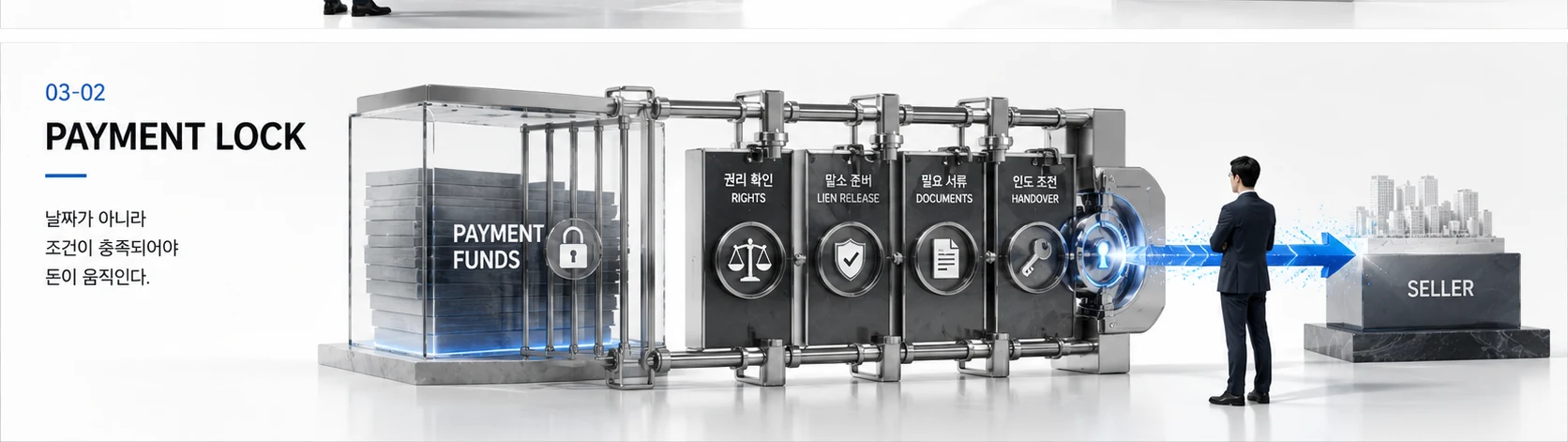
Money should move through verification gates, not just calendar dates.

Overview graphic for Price & payment terms
CONTRACT FLOW

Follow the money in one flow.

The purchase price is not only a total. Review the deposit, interim payments, closing balance, assumed deposits, adjustments and financing as a sequence tied to verification points.

  1. 01PRICE

    The purchase price is not only a total. Review the deposit, interim payments, closing balance, assumed deposits, adjustments and financing as a sequence tied to verification points.

  2. 02PAID

    Understand why the cash amount differs from the headline price, what must be confirmed before each payment, whether the account is correct.

  3. 03ASSUMED

    If dates are treated as automatic triggers, money can move simply because the calendar says so even when an agreed condition has not been completed.

  4. 04ADJUST

    Attach a pre-payment check to each payment stage. Recalculate amounts and accounts, and align any release of rights or delivery of documents with the actual payment sequence.

  5. 05CLOSING

    If closing day arrives but the documents needed to release a security interest are not ready, the key question is not only the date but what must be completed before funds move.

  6. 06COSTS

    A payment date is a calendar point. A payment condition is a transaction control. Keep the order: verify → satisfy condition → pay.

  7. 07CASH

    The purchase price is not only a total. Review the deposit, interim payments, closing balance, assumed deposits, adjustments and financing as a sequence tied to verification points.

NORMAL BASELINE

Start with the normal payment flow.

Understand why the cash amount differs from the headline price, what must be confirmed before each payment, whether the account is correct, and how payment lines up with releases and document delivery.

01PRICE→
02PAID→
03ASSUMED→
04ADJUST→
05CLOSING→
06COSTS→
07CASH
When the sequence connects without unexplained gaps, move to the next verification.
Practical comparison graphic for Price & payment terms
VARIABLES

Check what changes the cash flow.

A sale price is one number, but actual cash movement is split among deposits, interim payments, closing funds, assumed tenant deposits, adjustments, and financing. Linking each payment to the checks that must precede it reduces the risk that the calendar overrides verification.

01

Separate the contract price from the actual transfer amount.

If tenant deposits are assumed and prior payments or expense adjustments exist, the amount transferred at closing can differ from the remaining contract price.

WHAT TO CHECK
  • Total purchase price
  • Amounts already paid
  • Assumed deposits
  • Actual amount after adjustments
WHY IT MATTERS

Assumed tenant deposits, service-charge adjustments, prepaid or unpaid expenses, and earlier payments can make the amount transferred at closing different from the contract price.

PREVENT

Total purchase price

IF DISCOVERED

Can you explain the difference between the total purchase price and the amount actually being transferred?

Resolve the difference before moving to payment or closing.
02

Document the basis for the deposit payment.

Confirm who received how much, when, the account holder, and whether the transfer matches the contract. Payment records later help explain the transaction flow.

WHAT TO CHECK
  • Deposit amount
  • Payment date
  • Receiving account
  • Contract payment term
WHY IT MATTERS

Deposit, interim payment, and closing are stages of the transaction, not just dates.

PREVENT

Deposit amount

IF DISCOVERED

Are the conditions to be checked before each payment clearly identified?

Resolve the difference before moving to payment or closing.
03

Attach conditions that must be complete by the interim payment.

Where an interim payment exists, identify documents or actions that should be completed by that stage rather than setting only a date. Paying without conditions may reduce leverage later.

WHAT TO CHECK
  • Documents to review before interim payment
  • Status of special conditions
  • Recheck changes in rights
  • Decision whether to pay
WHY IT MATTERS

If lien releases, transfer documents, and the final payment are interconnected, decide in advance who confirms what and in what order rather than improvising at the closing table.

PREVENT

Documents to review before interim payment

IF DISCOVERED

Is the adjustment date for deposits, rent, service charges, and utilities clear?

Resolve the difference before moving to payment or closing.
04

Review closing funds together with rights and documents.

Because the largest payment often occurs at closing, review current rights, release readiness, transfer documents, and the payment account together.

WHAT TO CHECK
  • Latest rights record
  • Release readiness
  • Transfer documents
  • Final payment account
WHY IT MATTERS

Assumed tenant deposits, service-charge adjustments, prepaid or unpaid expenses, and earlier payments can make the amount transferred at closing different from the contract price.

PREVENT

Latest rights record

IF DISCOVERED

Do you know the execution sequence for releases and the closing payment?

Resolve the difference before moving to payment or closing.
MISSED POINT

Easy-to-miss payment checks.

Price negotiation may be complete, but payment design is not. Safety depends not only on the price but also on what must be verified before each movement of money.

01

Can you explain the difference between the total purchase price and the amount actually being transferred?

If tenant deposits are assumed and prior payments or expense adjustments exist, the amount transferred at closing can differ from the remaining contract price.

02

Are the conditions to be checked before each payment clearly identified?

Confirm who received how much, when, the account holder, and whether the transfer matches the contract. Payment records later help explain the transaction flow.

03

Is the adjustment date for deposits, rent, service charges, and utilities clear?

Where an interim payment exists, identify documents or actions that should be completed by that stage rather than setting only a date. Paying without conditions may reduce leverage later.

04

Do you know the execution sequence for releases and the closing payment?

Because the largest payment often occurs at closing, review current rights, release readiness, transfer documents, and the payment account together.

05

Was the payment account reconfirmed immediately before transfer?

Rent, service charges, utilities, deposits, and other prepaid or unpaid items should have a clear cut-off date so the closing calculation does not shift.

HOW TO CHECK

Verify before each payment.

Price negotiation may be complete, but payment design is not. Safety depends not only on the price but also on what must be verified before each movement of money.

  1. 01

    Separate the contract price from the actual transfer amount.

    LOOK HERE

    If tenant deposits are assumed and prior payments or expense adjustments exist, the amount transferred at closing can differ from the remaining contract price.

    COMPARE

    Total purchase price

    NORMALThe current evidence matches the expected condition.
    IF DIFFERENTIdentify the cause and impact of the difference.
    ACTION
    • Total purchase price
    • Amounts already paid
    • Assumed deposits
    • Actual amount after adjustments
    Can you explain the difference between the total purchase price and the amount actually being transferred?
  2. 02

    Document the basis for the deposit payment.

    LOOK HERE

    Confirm who received how much, when, the account holder, and whether the transfer matches the contract. Payment records later help explain the transaction flow.

    COMPARE

    Deposit amount

    NORMALThe current evidence matches the expected condition.
    IF DIFFERENTIdentify the cause and impact of the difference.
    ACTION
    • Deposit amount
    • Payment date
    • Receiving account
    • Contract payment term
    Are the conditions to be checked before each payment clearly identified?
  3. 03

    Attach conditions that must be complete by the interim payment.

    LOOK HERE

    Where an interim payment exists, identify documents or actions that should be completed by that stage rather than setting only a date. Paying without conditions may reduce leverage later.

    COMPARE

    Documents to review before interim payment

    NORMALThe current evidence matches the expected condition.
    IF DIFFERENTIdentify the cause and impact of the difference.
    ACTION
    • Documents to review before interim payment
    • Status of special conditions
    • Recheck changes in rights
    • Decision whether to pay
    Is the adjustment date for deposits, rent, service charges, and utilities clear?
  4. 04

    Review closing funds together with rights and documents.

    LOOK HERE

    Because the largest payment often occurs at closing, review current rights, release readiness, transfer documents, and the payment account together.

    COMPARE

    Latest rights record

    NORMALThe current evidence matches the expected condition.
    IF DIFFERENTIdentify the cause and impact of the difference.
    ACTION
    • Latest rights record
    • Release readiness
    • Transfer documents
    • Final payment account
    Do you know the execution sequence for releases and the closing payment?
  5. 05

    Make the adjustment date explicit.

    LOOK HERE

    Rent, service charges, utilities, deposits, and other prepaid or unpaid items should have a clear cut-off date so the closing calculation does not shift.

    COMPARE

    Adjustment date

    NORMALThe current evidence matches the expected condition.
    IF DIFFERENTIdentify the cause and impact of the difference.
    ACTION
    • Adjustment date
    • Allocation of rent
    • Utilities/service charges
    • Assumed deposits
    Was the payment account reconfirmed immediately before transfer?
WHEN THINGS DO NOT MATCH

Resolve payment differences first.

01
SAID / EXPECTEDThe calendar says it is closing day, but documents needed to release the seller's security interest are incomplete.
≠
FOUNDIf payment dates and payment conditions are treated as the same thing, the schedule can overtake verification.
ACTION

Coordinate the release, documents, and transfer sequence with the professionals involved.

02
SAID / EXPECTEDThe closing transfer amount differs from the balance shown in the contract.
≠
FOUNDMixing assumed deposits and adjustments increases the chance of arithmetic errors.
ACTION

Reconcile the purchase price, prior payments, assumed deposits, and adjustments in a separate calculation table.

03
SAID / EXPECTEDA new account is sent by message on closing day.
≠
FOUNDTime pressure combined with a large transfer calls for re-verification.
ACTION

Reconfirm the account and recipient authority using existing contact information, the contracting party, and people present at closing.

01Can you explain the difference between the total purchase price and the amount actually being transferred?
02Are the conditions to be checked before each payment clearly identified?
03Is the adjustment date for deposits, rent, service charges, and utilities clear?
04Do you know the execution sequence for releases and the closing payment?
05Was the payment account reconfirmed immediately before transfer?
06Resolve the difference before moving to payment or closing.
DEEP DIVE 01

Separate the total price from the amount actually transferred.

Assumed tenant deposits, service-charge adjustments, prepaid or unpaid expenses, and earlier payments can make the amount transferred at closing different from the contract price. Use a separate payment worksheet to reconcile the figures.

01

Separate the contract price from the actual transfer amount.

If tenant deposits are assumed and prior payments or expense adjustments exist, the amount transferred at closing can differ from the remaining contract price. Keep a separate reconciliation table.

Total purchase price
02

Document the basis for the deposit payment.

Confirm who received how much, when, the account holder, and whether the transfer matches the contract. Payment records later help explain the transaction flow.

Deposit amount
03

Attach conditions that must be complete by the interim payment.

Where an interim payment exists, identify documents or actions that should be completed by that stage rather than setting only a date. Paying without conditions may reduce leverage later.

Documents to review before interim payment
Can you explain the difference between the total purchase price and the amount actually being transferred?
DEEP DIVE 02

Attach a pass condition to each payment stage.

Deposit, interim payment, and closing are stages of the transaction, not just dates. If documents, releases, or promised actions must be completed before payment, manage those conditions together with the schedule.

01

Review closing funds together with rights and documents.

Because the largest payment often occurs at closing, review current rights, release readiness, transfer documents, and the payment account together. Having cash ready does not mean the transaction is ready to close.

Latest rights record
02

Make the adjustment date explicit.

Rent, service charges, utilities, deposits, and other prepaid or unpaid items should have a clear cut-off date so the closing calculation does not shift.

Adjustment date
03

Separate the contract price from the actual transfer amount.

If tenant deposits are assumed and prior payments or expense adjustments exist, the amount transferred at closing can differ from the remaining contract price. Keep a separate reconciliation table.

Total purchase price
Are the conditions to be checked before each payment clearly identified?
REAL-WORLD CASES

Follow the situation → check → finding → action → result.

CASE 01

Closing day arrives but release documents are not ready

CHECK
The calendar says it is closing day, but documents needed to release the seller's security interest are incomplete.
FOUND
If payment dates and payment conditions are treated as the same thing, the schedule can overtake verification.
ACTION
Coordinate the release, documents, and transfer sequence with the professionals involved.
VERIFY
CASE 02

The amount changes because tenant deposits are assumed

CHECK
The closing transfer amount differs from the balance shown in the contract.
FOUND
Mixing assumed deposits and adjustments increases the chance of arithmetic errors.
ACTION
Reconcile the purchase price, prior payments, assumed deposits, and adjustments in a separate calculation table.
VERIFY
CASE 03

The payment account changes just before transfer

CHECK
A new account is sent by message on closing day.
FOUND
Time pressure combined with a large transfer calls for re-verification.
ACTION
Reconfirm the account and recipient authority using existing contact information, the contracting party, and people present at closing.
VERIFY
DECISION

Choose the next action.

01

PROCEED

The required condition is verified.

Move to the next step.
02

CLARIFY

Additional evidence is needed but can be obtained.

Resolve the difference before moving to payment or closing.
03

HOLD

A core condition remains unverified.

Resolve the difference before moving to payment or closing.
04

RECONSIDER

Important inconsistencies remain unresolved.

Resolve the difference before moving to payment or closing.
CORE PRINCIPLE

Verify first. Then pay.

FINAL SUMMARY

Final payment check.

A sale price is one number, but actual cash movement is split among deposits, interim payments, closing funds, assumed tenant deposits, adjustments, and financing. Linking each payment to the checks that must precede it reduces the risk that the calendar overrides verification.

01

Separate the contract price from the actual transfer amount.

If tenant deposits are assumed and prior payments or expense adjustments exist, the amount transferred at closing can differ from the remaining contract price. Keep a separate reconciliation table.

02

Document the basis for the deposit payment.

Confirm who received how much, when, the account holder, and whether the transfer matches the contract. Payment records later help explain the transaction flow.

03

Attach conditions that must be complete by the interim payment.

Where an interim payment exists, identify documents or actions that should be completed by that stage rather than setting only a date. Paying without conditions may reduce leverage later.

04

Review closing funds together with rights and documents.

Because the largest payment often occurs at closing, review current rights, release readiness, transfer documents, and the payment account together. Having cash ready does not mean the transaction is ready to close.

05

Make the adjustment date explicit.

Rent, service charges, utilities, deposits, and other prepaid or unpaid items should have a clear cut-off date so the closing calculation does not shift.

Final 10-second contract checkSeparate the contract price from the actual transfer amount. › Document the basis for the deposit payment. › Attach conditions that must be complete by the interim payment. › Review closing funds together with rights and documents. › Make the adjustment date explicit.
Next step04 Contract terms & special clauses

How do you turn findings and agreements into enforceable deal terms?

→

This guide provides general educational information. Legal, tax, registration and transaction decisions can vary by jurisdiction and deal structure.

Price & payment terms | FIX BUILDING